Background: Ross Gay was born on August 1st, 1974 in Youngstown, Ohio. He grew up outside of Philadelphia, Pennsylvania. He was influenced by June Jordan, who wrote “Nowadays the Heroes” in response to successful landing of Apollo 11 mission on the moon in 1969. To him, Jordan “made imagination possible,” he explained to an audience at a poetry reading in Charlottesville, Virginia. Thus, she is very important to the beginning of his career as a poet.
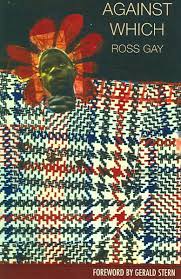
Gay’s first collection of poems was Against Which, published in October 2006 through CavanKerry Press. He did not yet have the backing of The University of Pittsburg Press, which published his next two books, Bringing the Shovel Down (2011) and Catalogue of Unabashed Gratitude (2015). Catalogue of Unabashed Gratitude won the Kingsley Tufts Award in 2016 and was a finalist for the National Book Award in 2015 and the National Books Critics Circle Award in 2016. His most recent work is a collection of short essays, The Book of Delights (2019), published by Algonquin Books of Chapel Hill.
TW: sexual assault
A man with a sense of humor, Gay eagerly draws readers and audience members alike into the world of his poems, inviting them with direct addresses such as “you” and “reader.” He is endlessly fascinated with new ideas, even revealing to audience members during a 2017 reading in Charlottesville that “it’s always the new stuff that’s most exciting.” He read from a collection of essays about happiness he is currently working on, which sprung from a year of journaling happy moments from each day. This collection would be published as The Book of Delights two years later, in 2019. His essays blend prose and poetry into a form all his own. Debra Nystrom, a poet and professor at the University of Virginia, introduced him by saying that he has “set out to praise and honor our world, […] to say ‘thank you’” (Gay, Poetry Reading). And praise he does, never shying away from the gruesomeness or simplicity of each moment. Rather, he embraces both, revealing how opposing elements often work in tandem.
Themes of violence and love are central to Ross Gay’s free verse poetry collection Against Which. Gay’s use of repetition, enjambment, and body parts in this collection reveal a striking intimacy that is complicated by violence. This critical essay will explore the complexity of this relationship by tracking throats and necks across the three parts of the collection. This essay delves into the depiction of throats and necks in each part, focusing on their association with violence, intimacy, and trust (or lack thereof). It will end with an analysis of the overall message, which is that violence and love have become so intertwined as to be conflated, and individuals should do everything in their power to separate the two because it is dangerous not to know the difference.
In the first part of the collection, throats are associated with intimacy and life. When someone takes a breath, the air must travel through their throat, which can be cut off suddenly. For example, in “Broken Mania,” the speaker strangles a drunk man who attempts to sexually assault his own girlfriend outside a bar, telling him (12-13):
This is not a joke
when I wrap my hand tight
around the drunk man’s throat,
the drunk who heaves his girlfriend
around the Chevy, while she begs
no and please
The enjambment of “while she begs / no and please” calls attention to the woman’s efforts to get her boyfriend to stop making sexual advances, as well as his deafness to her pleads. The drunk man “heaves his girlfriend / around the Chevy” with the intention of forcing her to comply with his demand for sex. He is stopped by the speaker, who intervenes to protect the woman. The speaker is frustrated by the disrespect the drunk man has for his girlfriend, as well other bar patrons’ obliviousness to the situation. Clearly, the drunk man has a misconstrued understanding of love, while the speaker recognizes his actions as an unacceptable act of violence. He is overcome by rage at the situation—that a man would combine strength with affection, making the two inseparable—which is what drives him to the extreme. Multiple times throughout the poem, the speaker tells the drunk man “[t]his is not a joke,” which reinforces his increasing rage. It is interesting that the speaker chooses to strangle the drunk man, because of its association with intimacy; lovers often kiss the neck of their partner as a sign of trust. It is ironic, then, that the drunk man, who broke his girlfriend’s trust, gets choked.
The speaker also sees this connection, but describes himself and the drunk man as “intimates” because of his familiarity with “the gurgling noise slurping / about in [the drunk man’s] throat” (12). These sounds are associated with the drunk man choking and not being able to breath, yet the speaker associates them with love. It is unclear if the speaker also has a skewed sense of the line between violence and love, or if he describes them as “intimates” ironically. The diction, especially the word “intimates,” could potentially be Gay’s way of cueing in the reader to the hypocrisy of the speaker’s brutal yet intimate response to the drunk man’s conflation of love and violence. This conflation is also present in “Two Bikers Embrace on Broad Street,” when the speaker sees two men who are fighting with an odd sense of closeness (5):
each man’s face
so deeply buried in the other’s neck—these men
not, my guess, to be fucked with—squeezing through
that first, porous layer of the body and into the heat beneath
Though it is understood that they are fighting brutally with the intention to hurt each other, there is an undercurrent of romantic intimacy. In this instance, the neck is described as part of an altercation, not a romantic kiss. There is also a sexual undertone in these lines that the diction indicates. The phrase “fucked with” has a dual meaning, referring to both the intimidation of these men as well as a subtle indication that they are having sex since they are entering “the heat beneath” the “first layer of the body” (12). The line “so deeply buried in the other’s neck—these men” stands on its own, which reveals the power of enjambment in this poem. It also seems to emphasize their masculinity, which could be commentary on the way society teaches men to express their affection through violence. It seems like the speaker is describing a hug, but he is actually witnessing a brawl on the street. On one level, the speaker understands that their fight is not intended to be intimate, yet he cannot help but see it as such. This, along with Gay’s conscious choice of the word “embrace” in the title, suggests that this conflation is intentional. Violence plays a key role in the speaker’s life, but he is still struggling to figure out how it connects to intimacy. This struggle to understand is emphasized by the image of throats and necks in both poems, as well as in poems in the other two sections.
In the second part of the collection, throats are also associated with violence and death. Gay explores the natural cruelty and compassion present in humans in “The Voice” when the speaker talks about “a burning” of “coal” being present in everything he does, describing it as (31):
a rage, and a violence, a need
to murder, and exalt, even your body
built for the task, hands long and strong
for strangling, or prayer
The enjambment of these lines is very effective, since it pushes along the meaning of the poem by allowing certain phrases to stand alone and run over to the next line. For example, the parallelism of “a rage, and a violence, a need” builds the pressure of the moment, causing the reader to increase their pace. It also stands on its own, which adds to its power since the need is unnamed in that line. Additionally, the “need” hanging on the end of the line makes it stand out more, which emphasizes the need, as well as the intensity of the rage and likelihood of violence. The way “a need / to murder” spills over onto the next line places an increased importance on murder since it is separated from the need, which also makes murder seem even more gruesome. Similarly, “even your body / built for the task” spills over two lines, emphasizing the shock the speaker has not only at the body’s capability of violence, but also the naturalness of it. The speaker does not know how to come to terms with the fact that his body has been built for two opposing things: strangling and prayer, ferocity and compassion. It is ironic that “hands long and strong / for strangling,” in a physical sense are also strong for prayer in a spiritual sense, revealing a familiarity the speaker has with God. The internal rhyme of “long and strong” makes the hands seem more innocent, even though they have the capability to be guilty of murder and cut off breath via the throat.
It is interesting to note that the speaker talked about this rage with his father, who is the one who named it: “burning, the coal, he called it, we are at its / mercy, he said, he who taught [me] / how to wear tenderness like a shawl” (31). The phrase “we are at its / mercy” flows so naturally, placing the reader at the mercy of the poet, who decides when to break the lines, just as the speaker is at the mercy of the burning rage he cannot control. He expresses the pervasiveness of this rage, describing all the everyday places it is present in his life, and despite that, he has a positive outlook (the speaker addresses a general you in this poem): “you spit molten ore each day, each blessed / day you glow, you blaze, you burn” (31). Rage and life churn in this poem, intensified by the repetition of “you” followed by a verb associated with heat and light. Even though the speaker is frustrated with this rage, which is evident by the repetition of “you scream” at the end of the poem, he still has hope; it is present in the description of days as “blessed,” which also adds a religious aspect to the poem. This reveals that he is grateful for the days he is given, even though they are marred by anger. This careful balance between “molten ore” and optimism reveals the speaker’s attempts to control his rage, which reveals in turn that he is becoming more aware of the role vehemence and anger play in his life. There is a shift in the collection from hands being wrapped violently around someone’s throat to being placed together in peaceful prayer to God; this shift also represents one from intimacy through violence to one through trust in and respect for a higher being.
In the third section of the collection, throats are largely associated with love, peace, and trust. Describing the “heart-shredding joys” of his lover, the speaker of “Her Breath” enthuses about “her voice, her breath, the smell of the god-sent / crook between her chin and neck” (68). The speaker is describing the simple pleasure of smelling his lover’s unique scent, which is strongest near her throat. The repetition of “her” followed by specific aspects of her in these lines emphasizes the speaker’s captivation by his lover. The enjambment of “the smell of the god-sent / crook between her chin and neck” emphasizes his infatuation with her scent, as well as its location because he recognizes the intimacy of it, since he likely had to gain her trust before she allowed him near such a vulnerable part of her. This reveals a new understanding of intimacy and love for the speaker, since he no longer directly associates it with violence. It also reinforces his seemingly newfound belief in God, by calling someone he loves a god-send. In “Thank You,” the speaker discusses his novel realization about life, advising the reader (71):
do not raise your fist. Do not raise
your small voice against it. And do not
take cover. Instead, curl your toes
into the grass, watch the cloud
ascending from your lips.
What he means is one should not act rashly or yell angrily against forces outside one’s control. One should not express love through violence, but embrace peace and life. The calm repetition of the phrase “do not raise your” conveys the speaker’s authority and wisdom on the subject, and adds a euphonious element to the poem. The choice of “fist” and “voice” are extremely important; in this context, fists are associated with hands and physical violence (such as strangling), while voice is associated with throats and verbal violence (such as yelling angrily). Thus, the message is one of peace and trust, especially since the following lines are “And do not / take cover. Instead, curl your toes / into the grass” (71). Rather than fear or lash out against something outside of one’s control, the speaker advises people to accept it, make peace with it, and continue living contently.
This correlates to the speaker’s previous tendency to lash out, like he did in “Broken Mania,” though for good cause. This marks growth in the speaker, since he used to conflate intimacy and violence, but now he realizes that they are distinct. Over the course of the collection, the speaker slowly realized that violence is not necessary to express love, and that, in fact, this association is dangerous and can lead to misconstrued ideas about love. This collection of poems intends to reveal the complex way violence has become intertwined with intimacy. (There is an interesting connection between hands and throats in this collection, which is characterized by violence. See all poems previously mentioned.) In revealing this connection, it also seeks to inform individuals how to separate the two: to love without violence, and not to rely on violence to express love. It exemplifies the possibility of one to reform one’s ways through the journey of the speaker from conflation to understanding. In the beginning of the collection, the speaker let his passions fuel his actions, which are often vicious, such as strangling the drunk man in “Broken Mania.”
However, by the end of the collection, the speaker is able to control that rage, to quell that fire, and refrain from acting violently. He also has a more positive, peaceful outlook on life. The development of throats and necks from victimized to appreciated throughout the collection allows one to track this change in the speaker from conflation to enlightenment. Perhaps unsurprisingly, delight in the mundane became a heavy theme in Gay’s later works, including his poetry collection Catalog of Unabashed Gratitude (2015) and his short essay collection The Book of Delights (2019).
Works Cited:
Gay, Ross. Against Which. 1st ed. CavanKerry Press, 2006.
Gay, Ross. Poetry Reading. Charlottesville, Virginia. 2017.
“Ross Gay.” The Poetry Foundation. https://www.poetryfoundation.org/poets/ross-gay
 Kasey Roper