As we walk along the forest path, my friend and I tread where only animals do, our tracks sticking out amidst the barely-there bunny tracks, delicate deer prints, and crisp coyote paws. All are so unique and yet all are natural to the forest. We are the ones who don’t belong. Our intricate imprints in the snow—Calvin Kline’s latest tread three years ago when I first got my snowboots and my friend’s classic combat boot tread—are too over the top when compared to the two half-moons of the deer’s light tread.
Every step we take breaks the top layer of fresh snow. It will never be fluffy again, until the next layer falls and covers our tracks. Soon we are straying away from the path and deeper into the eerily empty silence of the winter woods. Barren branches reach out to us, inviting us in. Emily dives forward, but I linger back. Something about them seems unright. Unnatural.
She pushes through the branches with her shoulders, easily brushing past them. I, on the other hand, hold them away from my face, keep them at bay like they are bright lights and my hands are darkness: a natural equalizer. Another one is age, if the body stays true to it. Yet every branch I push away snaps under the pressure, breaks away from the solemn tree and withers in my hands like dust. I shake these tendrils off, but they stick to my guilty gloved hands.
We reach the reservoir and the thin sheets of ice that cover it dazzle me with their brilliance. I have never noticed how beautiful pain is and how the frigid winter preserves this deserving beauty far more gracefully than any other season. Summer is simple, happy. It brings people close together, creates the initial warm connection, but winter. Winter tests those shaky bonds, freezes them, shakes them with its fierce and bitter wind. Some connections survive. But the rest break.
She stands on the edge between the present land and the frozen future ahead,
Tapping her inadequate fall boots on the enormous sheet of ice in front of her. The woman dressed in a black trenchcoat has one foot on land, one searching for the flaws and weak points that might crack should she step out onto the ice. It squeals in a high pitch and breaks under the pressure; her boot sinks into the freezing cold water.
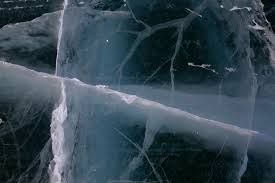
What is left is a crater on the edge of the ice, clear water escaping from underneath and pouring to the surface. Somehow, it is beautiful. Splinters radiate from the center, thin lines all spiraling out yet connecting in more places than one. How can breaking be this beautiful? I thought then.
Further down the shore now, in a hollow hidden from the sun, she grasps the trunk of a loyal tree and stretches out, searching for more ice with the desperate eyes of a lookout who searches for new land. She of course, is looking away from land and into frozen landlocked sea.
Boot on ice, weight on boot, pressure builds up on ice. Cracks echo across the hollow, but they are deep, strong notes. She slides her foot across the ice one last time to test it. It must have passed because she places both feet on it and shuffles around gracefully, using the slick surface to guide and hold her. I watch from the shore, wondering: how does it not break?
It turns out some things are stronger than we anticipate because we judge them too quickly, think only of what we expect from the past, instead of assessing the new situation before us and trusting that things are born with the ability to change. But we must also keep in mind how fragile the world is, how easily anything could break.
I stand on the shore, longing to glide across water as she does, so I tap the ice in the hollow. It does not shatter at my touch. This is good. It is strong. I, too, must be strong if I want the ice to cooperate with me. Deep breath. Foot forward. Step. A smile flutters on my face, excitement bubbles up from under the ice and flows freely into me; I drink it and am revived from this slow death that has been eating me. Cold cannot beat me now for I am free, walking on its trapped crystalline foundation.
Despite the chill in my ears and the numbness in my fingers that reminds me
I have been exposed too long, I stay, at peace with the captured leaves beneath the surface. This sheet of ice is not perfect. It is not level. It has leaves and twigs, entire logs and stones stuck within it, inseparable unless broken.
Too soon, I am sliding around on fragile ground as if there is no ground and I realize: there is danger in being so carefree. If I slip, that’s it, it’s over, there will be no me and yet I dismiss the thought as I take another look at the world trapped beneath me. Covering up the dirt does not make the surface less beautiful; rather, it makes the discovery all the more worthwhile. For every surface is cracked at some point. For now, though, I wish only for strong ice and no breaking.
Willing to go further out than me, she is breathtaking in her bold endeavors, feet away from shore, treading on thinner and thinner ice but it still stands. She still stands on her own two boots with the endless support of the ice. She stands in a frozen forest of greenery preserved by the cold that once resided far out of reach in the waters of life. In a section she has not stepped foot on, cracks are visible, stretching for feet to break them from across the hollow. Her eyes crinkle as she looks back at me.
“See, even nature breaks itself.”
 Kasey Roper